
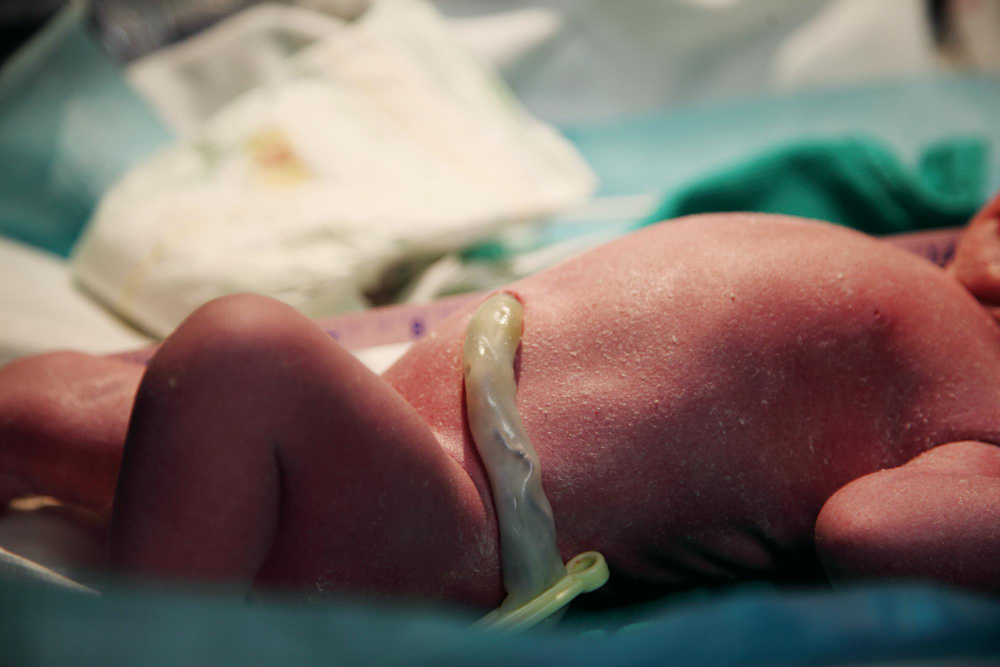
When parents ask whether their child’s birth injury could have been prevented, the honest answer is often yes. A meaningful share of birth injuries trace back to a delay, a missed warning sign, or a decision that a more careful provider would have made differently. At Phillips Law Offices in Chicago, Illinois, we review medical records for a living to find out which cases fall into that category and which don’t, since the two require very different conversations with a family.
Understanding What a Birth Injury Means
A birth injury is harm that occurs to a baby before, during, or immediately after delivery. Some of these injuries are minor and resolve on their own within weeks. Others, including cerebral palsy, Erb’s palsy, and brain damage from oxygen deprivation, can affect a child for the rest of their life.
Common preventable birth injuries include cerebral palsy, Erb’s palsy and other brachial plexus injuries, shoulder dystocia complications, hypoxic-ischemic encephalopathy, fractured clavicles, and facial nerve damage. What links most of these conditions is not the injury itself but the sequence of decisions that led up to it: a heart rate pattern that should have prompted an earlier delivery, a delivery tool used with more force than the situation called for, or a maternal risk factor that was documented but not actively managed.
At Phillips Law Offices, we regularly work with families who trusted their care team completely and were still failed by a gap in that care. Medical professionals are required to meet an accepted standard of care for the specific situation in front of them. When they fall short of that standard and a baby is harmed as a result, the injury generally qualifies as preventable in a legal sense, whatever it may have felt like to the family living through it.
Common Causes of Preventable Birth Injuries
Several recurring patterns show up across the preventable birth injury cases our attorneys review. None of them are rare or exotic; they’re ordinary lapses that happen to occur during one of the highest-stakes moments in medicine.
1. Failure to Monitor Fetal Distress
Labor and delivery teams are expected to continuously track the baby’s heart rate and oxygen levels throughout labor. Abnormal patterns, such as prolonged decelerations or a flat baseline, are supposed to trigger an immediate clinical response, not a wait-and-see approach. When staff miss these signs, or see them and delay acting, the result can be brain damage, cerebral palsy, or in the most severe cases, stillbirth.
A timely emergency C-section can often prevent the worst outcomes tied to fetal distress. When that intervention comes too late because staff were inattentive or the monitoring itself was inadequate, the resulting injury is generally preventable.
2. Delayed or Improper Cesarean Section
One of the most common preventable scenarios our firm sees involves a C-section that should have happened sooner. Prolonged labor combined with signs of fetal distress typically calls for surgical delivery well before the situation becomes an emergency. When a physician waits too long, hoping labor will progress naturally, both mother and baby can be harmed.
Our legal team reviews hospital timelines, fetal monitoring strips, and nursing notes minute by minute to determine exactly when the standard of care called for a different decision, and how much time separated that moment from when the C-section actually happened.
3. Misuse of Delivery Instruments
Forceps and vacuum extractors assist with genuinely difficult deliveries, and used correctly they prevent harm rather than causing it. The problem arises with excessive traction, an incorrect angle of application, or repeated attempts after an initial one failed. These missteps can cause skull fractures, intracranial bleeding, and nerve damage that a properly trained and appropriately cautious provider would have avoided.
4. Mismanaged Maternal Risk Factors
Gestational diabetes, preeclampsia, and untreated infections all raise the risk of birth injury when they aren’t actively managed through the third trimester and into labor. A risk factor noted in a chart and then never followed up on is functionally the same, from a negligence standpoint, as never having noted it at all.
The Role of Medical Negligence in Birth Injuries
Proving medical negligence requires four elements, and a case needs all four to hold together: a doctor-patient relationship existed, the provider owed a duty consistent with the accepted standard of care, that duty was breached, and the breach directly caused the injury. A bad outcome alone, without a breach that caused it, is not malpractice under Illinois law, however devastating it is for the family.
In practice, negligence often shows up as a communication failure as much as a technical one. A nurse who notices a concerning heart rate pattern but doesn’t escalate it to the attending physician. A physician who sees the same pattern on a monitor and continues with a plan that no longer fits the situation. An anesthesiologist who isn’t paged early enough for a C-section that turns out to be needed. Every birth injury case our firm takes on starts with a full medical record review and an independent obstetric expert’s opinion, since that combination is what actually tells a family whether the harm was avoidable and who was responsible for it.
A Realistic Example
The following illustrates how a preventable-injury claim typically gets built; it is not a description of any specific client’s case. During labor, a fetal heart monitor shows a pattern of repeated late decelerations over roughly 45 minutes. The nurse charts the pattern but does not notify the attending physician until a shift change nearly an hour later. By the time an emergency C-section is performed, the baby has suffered a hypoxic injury that results in a cerebral palsy diagnosis months afterward. In a case built around a scenario like this, an expert would be asked whether that 45-minute-to-60-minute gap fell outside the accepted standard for escalating a documented distress pattern, and whether earlier delivery would more likely than not have prevented or reduced the injury. Both questions have to be answered yes for the case to hold together.
Could Your Child’s Birth Injury Have Been Prevented?
In a meaningful number of cases, yes. Healthcare providers are trained specifically to identify risk and act on it quickly. When that training doesn’t translate into action at the bedside, the consequences fall on the baby and the family, not on the provider who made the decision.
A few signs worth paying attention to:
- The medical team delayed an intervention that the chart shows was already indicated.
- Fetal monitoring data was recorded but appears to have been ignored or misread.
- A C-section happened well after warning signs were already documented.
- A delivery instrument was used in a way that caused trauma beyond what the delivery itself would explain.
If any of this sounds familiar, it’s worth having the record reviewed by someone outside the hospital that provided the care. Our Chicago birth injury attorneys can walk through what a review would look like and what it typically costs, which, for the initial consultation, is nothing.
Illinois Law on Preventable Birth Injury Claims
Illinois medical malpractice law gives families a real path to compensation when a preventable birth injury is caused by negligence, but it comes with procedural requirements that matter as much as the medical facts.
- Statute of limitations. Under 735 ILCS 5/13-212, a minor’s birth injury claim generally must be filed within eight years of the injury, and no later than the child’s 22nd birthday, whichever comes first. This gives families more time than an adult malpractice claim would allow, but it is not unlimited.
- Affidavit of merit. Illinois requires an affidavit under 735 ILCS 5/2-622 from a qualified health professional confirming the claim has a reasonable basis, filed with the complaint or within 90 days after it. This is a procedural gate, not a formality, and a case can be dismissed for failing to meet it regardless of the underlying medical facts.
- Public hospital deadlines. Deliveries at a county or public hospital fall under 745 ILCS 10/8-101(b), which allows two years from discovery of the injury and can be shorter than the general filing deadline.
- No cap on non-economic damages. In Lebron v. Gottlieb Memorial Hospital, 237 Ill. 2d 217 (2010), the Illinois Supreme Court struck down the state’s prior cap on non-economic damages in medical malpractice cases, leaving that determination to the jury rather than a fixed statutory ceiling.
Illinois generally does not permit punitive damages in medical malpractice cases. Compensation in a birth injury case is built around the actual costs and losses the family faces, not around punishing the hospital beyond that.
Common Defenses Raised in These Cases
Hospitals and their insurers don’t concede preventable-injury claims easily, and it helps to know their usual playbook going in. A frequent defense is that the injury resulted from an underlying condition or a birth process complication that no intervention could have prevented. Another is that the monitoring strip, read in real time rather than after the fact, did not clearly show the kind of distress a plaintiff’s expert later identifies with the benefit of hindsight. A third argues that even a faster response would not have changed the outcome given how quickly the injury occurred. Each defense is addressable with a thorough record and the right expert, which is exactly why the investigation phase of a claim deserves real time and attention rather than being rushed.
Chicago and Cook County Hospital Considerations
Families across Chicago deliver at a wide range of hospitals, from large academic medical centers with dedicated NICU units to smaller community hospitals with more limited overnight staffing. Those differences matter in a preventable-injury investigation. A busy labor and delivery floor running short-staffed on a particular night, or a facility without an obstetrician physically on-site around the clock, introduces risk factors worth examining separately from any individual physician’s decisions. If your delivery happened at a county or public hospital, that also affects the notice deadline discussed below, which is one more reason to confirm the facility’s status early rather than assuming the standard timeline applies.
What to Gather Before Your Consultation
A few steps make the initial record review faster and more useful, whether or not you ultimately move forward with a claim:
- Request the complete labor, delivery, and newborn record in writing, specifically including fetal monitoring strips, not just the discharge summary.
- Write down your own recollection of the delivery while it’s still fresh, including anything staff told you at the bedside, even comments that seemed routine at the time.
- Keep every follow-up record connected to your child’s diagnosis, therapy sessions, or developmental screenings, since these documents are what connect the delivery to the injury over time.
- Hold off on signing anything from the hospital’s insurer, including a settlement offer, until an attorney has reviewed it.
Long-Term Consequences of Preventable Birth Injuries
A preventable birth injury rarely resolves within the first year of a child’s life. Many families face years of physical therapy, occupational therapy, surgeries, and specialized educational support, along with adaptive equipment and home modifications that a typical household budget was never built to absorb.
Conditions like cerebral palsy or Erb’s palsy can affect mobility, fine motor control, and cognitive development in ways that only become fully clear as a child grows. A therapy plan appropriate for a toddler may look completely different by the time that same child reaches school age, which is part of why a well-built claim accounts for future needs, not only the costs already incurred.
At Phillips Law Offices, we build cases around what a child will actually need over a lifetime, working with life-care planners and financial experts to project those costs credibly, not just the medical bills already on file.
How Phillips Law Offices Can Help
With decades of experience handling birth injury cases in Chicago and across Illinois, our attorneys prepare every case as though it may go to trial, since that preparation is what tends to produce a fair settlement offer in the first place.
We work with obstetric experts, life-care planners, and economists to build cases that show exactly how the injury could have been prevented and what long-term support the child will require. We handle claims involving:
- Cerebral palsy and hypoxic-ischemic encephalopathy (HIE)
- Shoulder dystocia and brachial plexus injuries
- Delayed or failed C-sections
- Medication or anesthesia errors during childbirth
- Maternal injuries connected to the same underlying negligence
When a hospital or physician falls short of the standard of care, we hold them accountable through negotiation, and through trial when a fair resolution isn’t offered.
Taking Legal Action: Your Next Step
If you suspect your child’s injury was preventable, acting sooner protects your options. Illinois law limits the time available to file a claim, and evidence such as fetal monitoring strips and nursing shift records is easier to obtain, and easier for witnesses to recall accurately, the sooner an investigation begins.
Frequently Asked Questions
How do I know if my child’s injury was actually preventable, or just a hard delivery?
That distinction usually requires an independent medical record review. A hard delivery with appropriate, timely responses looks very different in the chart from one where warning signs were present and not acted on.
What if the hospital told us the outcome was unavoidable?
A hospital’s explanation reflects its own account of events, not necessarily an independent one. It’s not unusual for an outside specialist reviewing the same record to reach a different conclusion.
How long do we have to file a claim in Illinois?
Generally up to eight years from the injury, or until the child’s 22nd birthday, whichever comes first, though public-hospital deliveries can carry an earlier notice deadline. Confirming which deadline applies is one of the first things an attorney should do.
Will we have to pay anything to have our case reviewed?
No. Phillips Law Offices offers a free consultation and works on contingency, so there’s no fee unless we recover compensation for your family.
What if more than one provider was involved in the delivery?
That’s common in hospital births, and it can actually help a family’s case, since each provider, and sometimes the hospital itself, may carry separate insurance coverage that affects the total compensation available.
Do we need to already have a diagnosis before contacting an attorney?
No. Some families reach out with a confirmed diagnosis like cerebral palsy in hand, and others reach out earlier, while a pediatrician is still working through what’s causing a delay in their child’s development. Either point is a reasonable time to have the delivery record reviewed.
Will pursuing a claim affect our child’s ongoing medical care?
No, and the two shouldn’t be treated as being in tension. Your child’s treating providers focus on care going forward; your attorney’s job is to evaluate what happened at delivery. In practice, many of the same records your child’s current specialists rely on are also what your attorney needs to evaluate a claim, so requesting them once tends to serve both purposes.
Contact Phillips Law Offices
At Phillips Law Offices, we offer a Free Consultation, No Fee Unless You Win. You can speak with our attorneys about your child’s case without worrying about upfront costs.
Call us today at (312) 346-4262 or visit our office at 161 N Clark St, Suite 4925, Chicago, IL. We’re here to listen, walk you through your legal options, and help you pursue the answers your family deserves.
More Birth Injury Guides
- Main guide: Types Of Injuries From Birth
- Frequently Asked Questions (FAQs) About Birth Injuries
- Chicago Birth Injury FAQ: Your Questions Answered
- What Is the Difference Between a Birth Injury and a Birth Defect?
- Illinois Medical Malpractice Statute of Limitations for Birth Injuries
- What Compensation Can I Recover in a Chicago Birth Injury Case?
- Browse all birth injury guides