
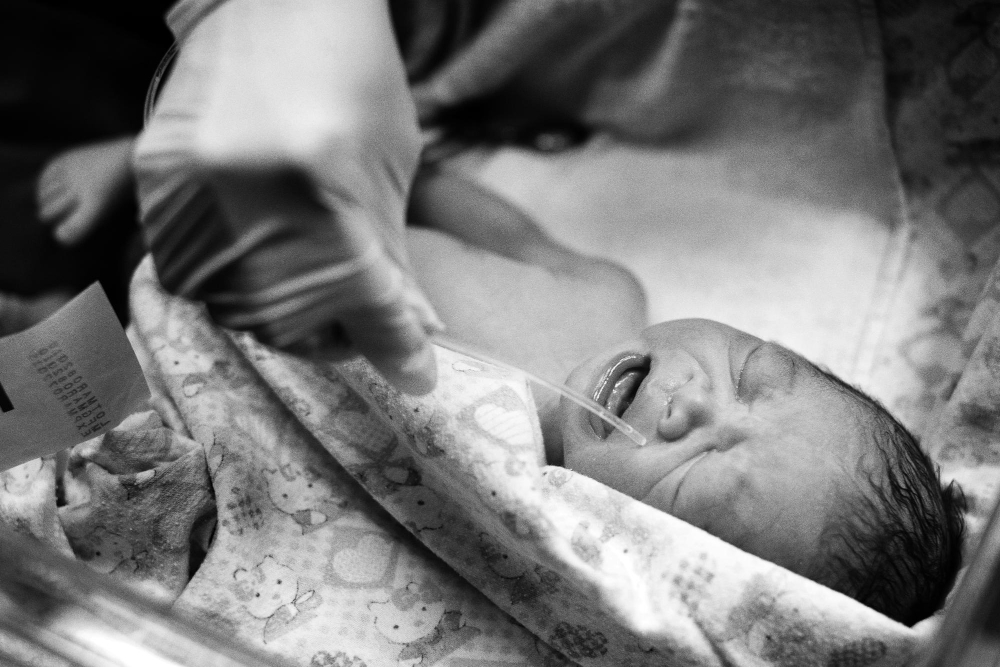
Fetal death, also called stillbirth, occurs when a baby dies before or during delivery after 20 weeks of pregnancy. For the family involved, the loss is total and immediate, and it usually arrives with almost no warning. Some stillbirths trace back to genuinely unpreventable causes. Others trace back to a warning sign that was recorded in the chart and never acted on. At Phillips Law Offices in Chicago, Illinois, we help families work through medical records to find out which one happened to them, and what options exist if the answer points to negligence.
What Is a Stillbirth?
A stillbirth is the death of a fetus in the womb after the 20th week of pregnancy, which distinguishes it medically and legally from an earlier miscarriage. Doctors classify stillbirths as antepartum, meaning the death occurred before labor began, or intrapartum, meaning it occurred during labor and delivery itself. That distinction matters in an investigation, since intrapartum stillbirths are more often tied to how labor was actively managed in the hours before delivery.
The Centers for Disease Control and Prevention (CDC) tracks thousands of stillbirths in the United States every year, and a meaningful share happen without any clear explanation ever being documented. That does not mean no explanation exists. It sometimes means the hospital’s own workup after the loss was incomplete, or that a cause was identifiable in the prenatal record but was never connected to the outcome by anyone reviewing the chart afterward.
Families are rarely in a position to do that kind of review themselves in the days and weeks after a loss like this. At Phillips Law Offices, we bring in medical experts who read labor and delivery records the way a specialist reads them, not the way a summary letter presents them. For families weighing legal options, our sister guide on wrongful death and survival actions in Illinois explains the broader framework these claims fall under.
Common Causes of Fetal Death or Stillbirth
Stillbirth has medical, environmental, and maternal-health causes that overlap in practice more often than they appear in a textbook list. Sorting out which factor actually drove a specific loss is the first real step toward knowing whether negligence played a role.
1. Placental Complications
The placenta delivers oxygen and nutrients to the baby throughout pregnancy. When it separates from the uterine wall too early, a condition called placental abruption, or when it simply stops functioning efficiently as the pregnancy progresses, the baby can be starved of oxygen over hours or days rather than in a single dramatic event. Ultrasound and growth monitoring are supposed to catch a failing placenta before it reaches that point. When those tools are ordered but the results are not acted on, or when they are not ordered at all despite risk factors already in the chart, that gap becomes relevant to a malpractice review.
2. Umbilical Cord Issues
A cord that becomes knotted, compressed, or wrapped can cut off oxygen flow to the baby, sometimes intermittently and sometimes completely. Fetal heart rate monitoring exists specifically to catch this kind of distress in real time. A pattern of repeated decelerations that goes unaddressed for an extended stretch of a monitoring strip is one of the more common findings our reviewing experts point to when a cord-related stillbirth turns out to have been preventable.
3. Maternal Health Conditions
Diabetes, chronic or pregnancy-induced hypertension, and infections all raise stillbirth risk when they are not managed closely. Managing them is not optional for the care team; it is the standard of care for anyone with a diagnosed risk factor. When a provider notes an elevated blood pressure reading or an abnormal glucose result and does not follow up on it with the urgency the condition calls for, that omission belongs in the same conversation as a more obvious error.
4. Preeclampsia and Related Emergencies
Preeclampsia and its more severe form, HELLP syndrome, can progress from a manageable condition to a fetal emergency within a matter of days. Warning signs include a sudden rise in blood pressure, protein in the urine, severe headaches, and visual disturbances the mother may report herself. Providers are expected to treat those complaints as clinical data, not as routine third-trimester discomfort, and to escalate to delivery when the numbers cross recognized thresholds.
5. Medical Negligence in Labor Management
Some stillbirths trace directly back to how labor itself was handled: a delayed C-section after fetal distress was already documented, a misread or ignored fetal heart tracing, improper dosing of labor-inducing medication such as Pitocin, or gaps in monitoring during a shift change. Hospitals and physicians are held to a standard that assumes continuous, attentive care throughout labor, not periodic check-ins.
Recognizing Medical Negligence in Stillbirth Cases
Not every stillbirth is preventable. Proving negligence requires four separate elements, and a case only holds together if all four are actually supported by the record: a doctor-patient relationship existed, the provider owed a duty of care consistent with accepted medical standards, that duty was breached, and the breach directly caused the baby’s death. Missing any one of those four, even where the loss itself is undeniable and devastating, means there is no viable malpractice claim. This is why an early record review matters so much, it tells a family, honestly, whether they have a case before anyone invests months into building one.
Patterns that tend to support a negligence finding include:
- Abnormal fetal heart rate patterns that were charted but not escalated
- Undiagnosed gestational diabetes or an untreated infection
- A delayed emergency C-section after distress was already documented
- Missed or skipped prenatal testing given known risk factors
- Preeclampsia or placental issues that were noted but not managed aggressively
When one or more of these patterns shows up in the chart, families have grounds to pursue a medical malpractice claim for their loss. At Phillips Law Offices, we do not take a family’s word for it and we do not take the hospital’s word for it either, we have the record reviewed independently and build the case around what that review actually shows.
A Realistic Example
The following is a hypothetical scenario built to illustrate how a claim like this typically comes together, not a description of any specific client’s case. A mother at 36 weeks reports noticeably decreased fetal movement to her provider’s office over the phone. She is told to monitor it at home and come in only if it worsens, rather than being brought in same-day for a non-stress test, which is the standard response to that complaint at that gestational age. Two days later she returns for a scheduled appointment and no fetal heartbeat is found. In a case built around a scenario like this, the central medical-record question is not whether the stillbirth happened, since that much is not in dispute, but whether decreased fetal movement at 36 weeks called for immediate evaluation under accepted obstetric guidelines, and whether an earlier non-stress test would more likely than not have caught a problem in time to intervene. That is the kind of question an independent maternal-fetal medicine expert is retained to answer, and the answer determines whether a claim exists at all.
Illinois Law on Stillbirth and Medical Malpractice Claims
Illinois law allows parents to pursue a wrongful death or medical malpractice claim when a stillbirth results from negligence, under the Illinois Wrongful Death Act, 740 ILCS 180. The loss of a fetus is treated as a real and compensable harm to the parents when medical negligence is the cause, not as a lesser category of loss.
A few procedural rules shape how these claims move forward, and missing any of them can derail an otherwise strong case:
- Statute of limitations. Under 735 ILCS 5/13-212, Illinois generally gives parents two years from when they discovered, or reasonably should have discovered, that negligence contributed to the loss, and no more than four years from the date of the underlying act regardless of when it was discovered.
- Affidavit of merit. Illinois requires an affidavit from a qualified health professional confirming the claim has a reasonable basis under 735 ILCS 5/2-622, filed with the complaint or within 90 days after it. Filing without one, or with one that does not meet the statute’s requirements, is one of the more common technical grounds a case gets dismissed on before it is ever heard on the merits.
- Public hospital claims. If delivery took place at a county or public hospital, 745 ILCS 10/8-101(b) generally governs instead, allowing two years from discovery of the injury with a four-year outer limit. Missing this window can bar an otherwise valid claim regardless of how strong the underlying medical evidence is.
- No cap on non-economic damages. The Illinois Supreme Court struck down the state’s former cap on non-economic damages in medical malpractice cases in Lebron v. Gottlieb Memorial Hospital, 237 Ill. 2d 217 (2010). A jury decides what a family’s loss is actually worth in a case like this, rather than that number being set in advance by statute.
One point worth stating plainly: Illinois generally does not allow punitive damages in medical malpractice cases, stillbirth claims included. Compensation in these cases is meant to address the actual harm the family suffered, not to punish the provider beyond that.
Common Defenses Hospitals and Insurers Raise
Hospital insurers rarely concede these cases early, and understanding their usual arguments helps set realistic expectations. A common defense is that the stillbirth was caused by an underlying, unavoidable medical condition rather than any delay or oversight in care, essentially, that the outcome would have happened no matter what the provider did. Another is that fetal heart rate monitoring, viewed after the fact with the benefit of hindsight, looks more alarming than it reasonably appeared to the clinician reading it in real time. A third is causation-based: even if a delay occurred, the defense may argue the outcome would not have changed had the response been faster. Each of these defenses is answerable with the right expert testimony and a complete record, which is exactly why the investigation phase of a claim is not a formality, it is where the case is actually won or lost.
Emotional and Financial Impact of Stillbirth
Grief after a stillbirth does not follow a predictable timeline, and it rarely resolves the way people expect it to. Parents often describe waves of guilt even where they did nothing wrong, along with anger, depression, and a kind of disorientation that can affect work, sleep, and other relationships for months. Siblings and grandparents carry a version of this loss too, even though the legal claim generally belongs to the parents.
Financial strain compounds the emotional toll. Families face hospital bills for a delivery that ended in loss, funeral and burial costs, counseling expenses, and lost income from time away from work that no one plans for in advance. A legal claim cannot undo the loss, but it can address these costs directly, along with the loss of the parent-child relationship the family expected to have.
What Compensation Can Cover
Illinois wrongful death and malpractice law allows families to seek compensation across several categories connected to a stillbirth: medical expenses tied to the pregnancy and delivery, funeral and burial costs, the parents’ pain and suffering, and in some cases the loss of the parent-child relationship the family would have had. Because there is no statutory cap on non-economic damages in Illinois malpractice cases, the value of a claim depends heavily on the specific facts, the strength of the expert testimony, and how clearly the record supports what happened, not on a predetermined ceiling.
What to Do If You Suspect Negligence Contributed to Your Loss
Requesting the complete labor and delivery record, not a discharge summary, is the practical starting point, since the summary version rarely includes the raw fetal heart rate strips and nursing notes an expert actually needs to review. From there, an attorney typically has that record reviewed by an independent specialist before deciding whether to move forward, which is also what the affidavit of merit requirement calls for. Hospital records are retained for years, so there is rarely a need to rush this decision out of fear the evidence will disappear, but starting sooner does make the records easier to obtain while staff who were present are still reachable and their memories are fresher.
Why Families Work With Phillips Law Offices
Phillips Law Offices has handled personal injury and medical malpractice matters in Chicago and across Illinois for decades, and stillbirth cases are among the most sensitive work our attorneys take on. We prepare every case as though it may go to trial, since insurers respond differently to a claim that is genuinely trial-ready than to one that is not, and we negotiate accordingly. We work on a contingency-fee basis, meaning a family pays nothing unless we recover compensation on their behalf.
How Our Legal Team Can Help
Our support for families in stillbirth cases covers the full arc of a claim:
- Detailed case evaluation: We obtain the complete medical record and have it reviewed by specialists qualified to evaluate exactly what happened.
- Proving negligence: We build the case around expert testimony that connects a specific breach of duty to the outcome, rather than relying on the outcome alone to speak for itself.
- Negotiation and trial: We negotiate directly with hospitals and their insurers, and we are prepared to take a case to trial when a fair resolution isn’t offered.
- Personalized guidance: We communicate in plain terms and keep families updated at each stage, rather than going quiet between milestones.
Frequently Asked Questions
How long do we have to file a claim in Illinois?
Generally two years from when you discovered, or reasonably should have discovered, that negligence contributed to the loss, and no more than four years from the date of the underlying act. Public-hospital deliveries carry an additional one-year notice requirement, so it’s worth confirming the delivery hospital’s status early.
Do we need to know exactly what went wrong before contacting an attorney?
No. Most families who call us are not sure whether negligence played a role, that uncertainty is exactly what a record review answers. You do not need a diagnosis of malpractice before reaching out.
What if the hospital’s own review found no fault?
A hospital’s internal review is not an independent one, and it is not a substitute for an outside expert reading the same records with no institutional interest in the outcome. It’s common for an independent review to reach a different conclusion.
Can we still pursue a claim if the cause of the stillbirth was never officially determined?
Often, yes. An undetermined cause on the death certificate reflects what the hospital documented at the time, not necessarily what a specialist reviewing the full record afterward would conclude.
How much does a consultation cost?
Nothing. Phillips Law Offices offers a free consultation and handles these cases on contingency, so there is no fee unless we recover compensation for your family.
Will pursuing a claim require reliving the experience in a courtroom?
Most malpractice claims, including stillbirth cases, resolve through negotiated settlement rather than trial. If a case does proceed to trial, your attorney prepares you for what to expect well in advance, and you are never navigating that alone.
Call Phillips Law Offices Today
If you believe medical negligence contributed to your baby’s stillbirth, it’s worth having the record reviewed even if you are not certain a claim exists. Time limits do apply, so acting sooner rather than later protects your options.
Contact Phillips Law Offices for a free consultation. No fee unless you win. Let us help your family get answers and hold the responsible parties accountable.
Call now: (312) 346-4262
Visit us: 161 N Clark St, Suite 4925, Chicago, IL
You don’t have to face this alone. Our team is here to help you find out what happened and pursue the accountability your family deserves.